Dashboards don't prevent outages
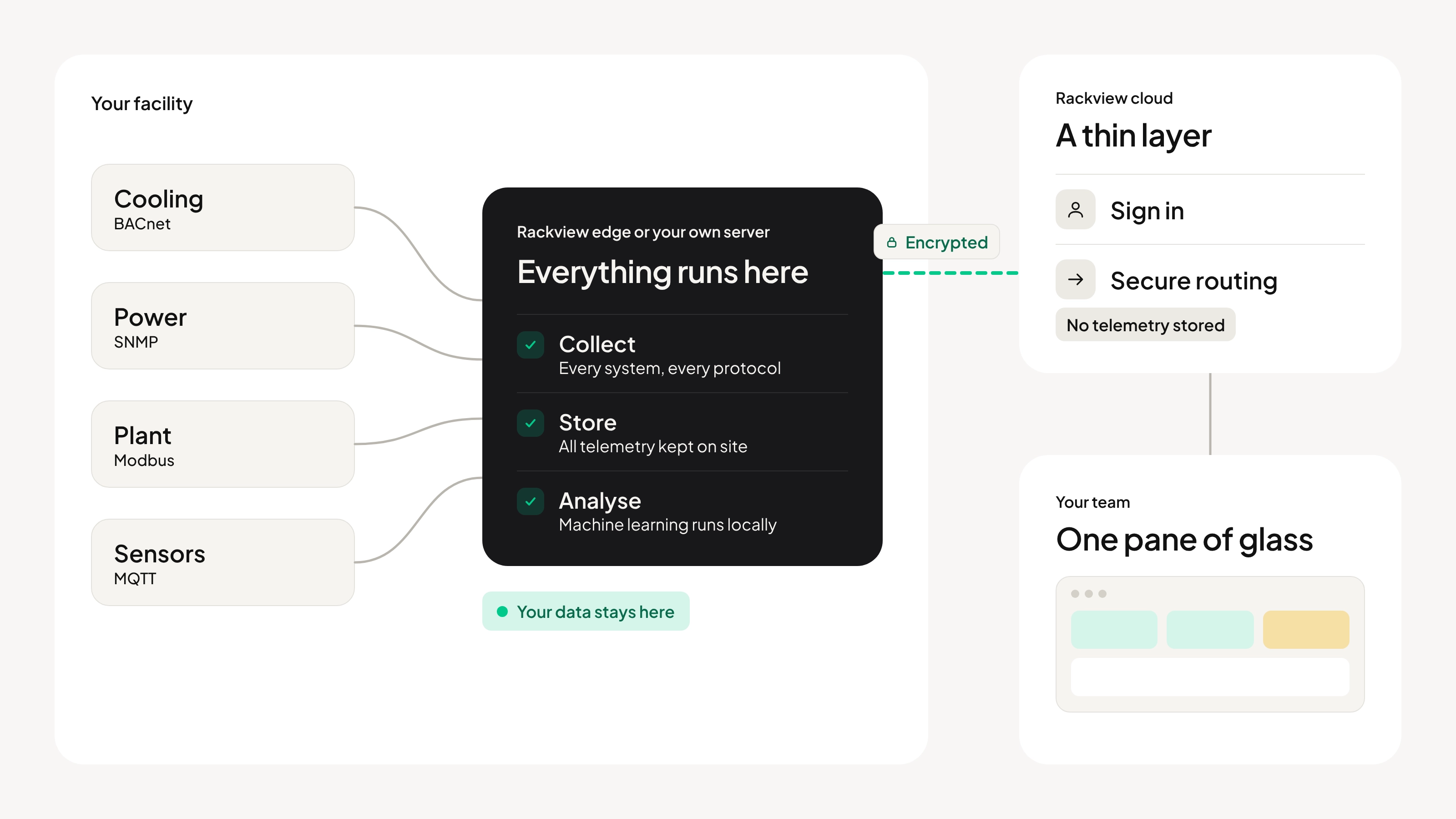
Every data centre has dashboards. Temperatures, power draw, humidity, alarms. Most operators can tell you exactly what's happening on their floor right now.
And yet outages still happen. Equipment still fails without warning. Teams still get the 2am call.
The problem isn't a lack of data. It's what the tools do with it.
Monitoring tells you what already happened
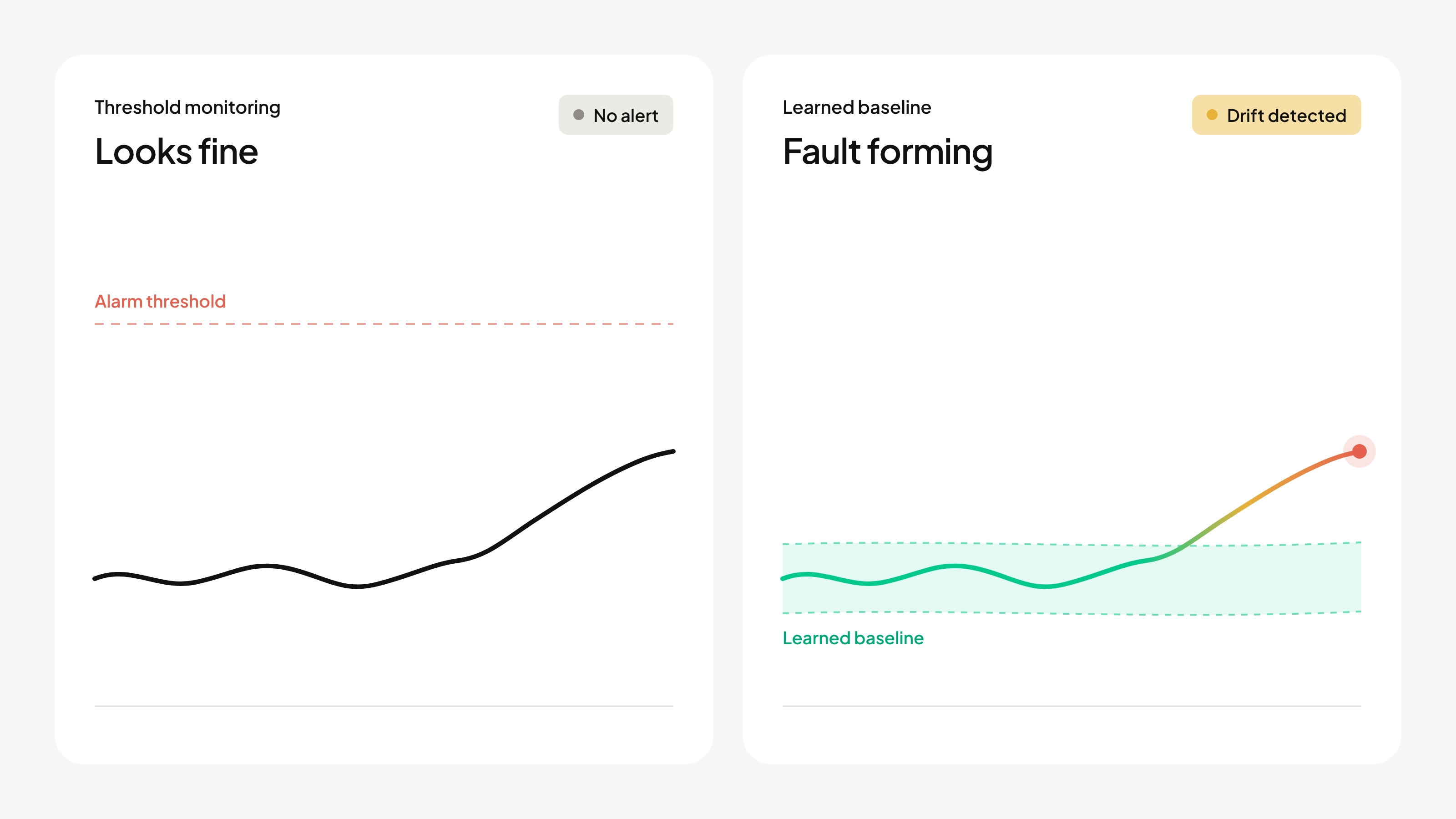
Traditional monitoring works on thresholds. Set a limit, and when a reading crosses it, raise an alarm. It's simple, it's predictable, and it's almost always too late.
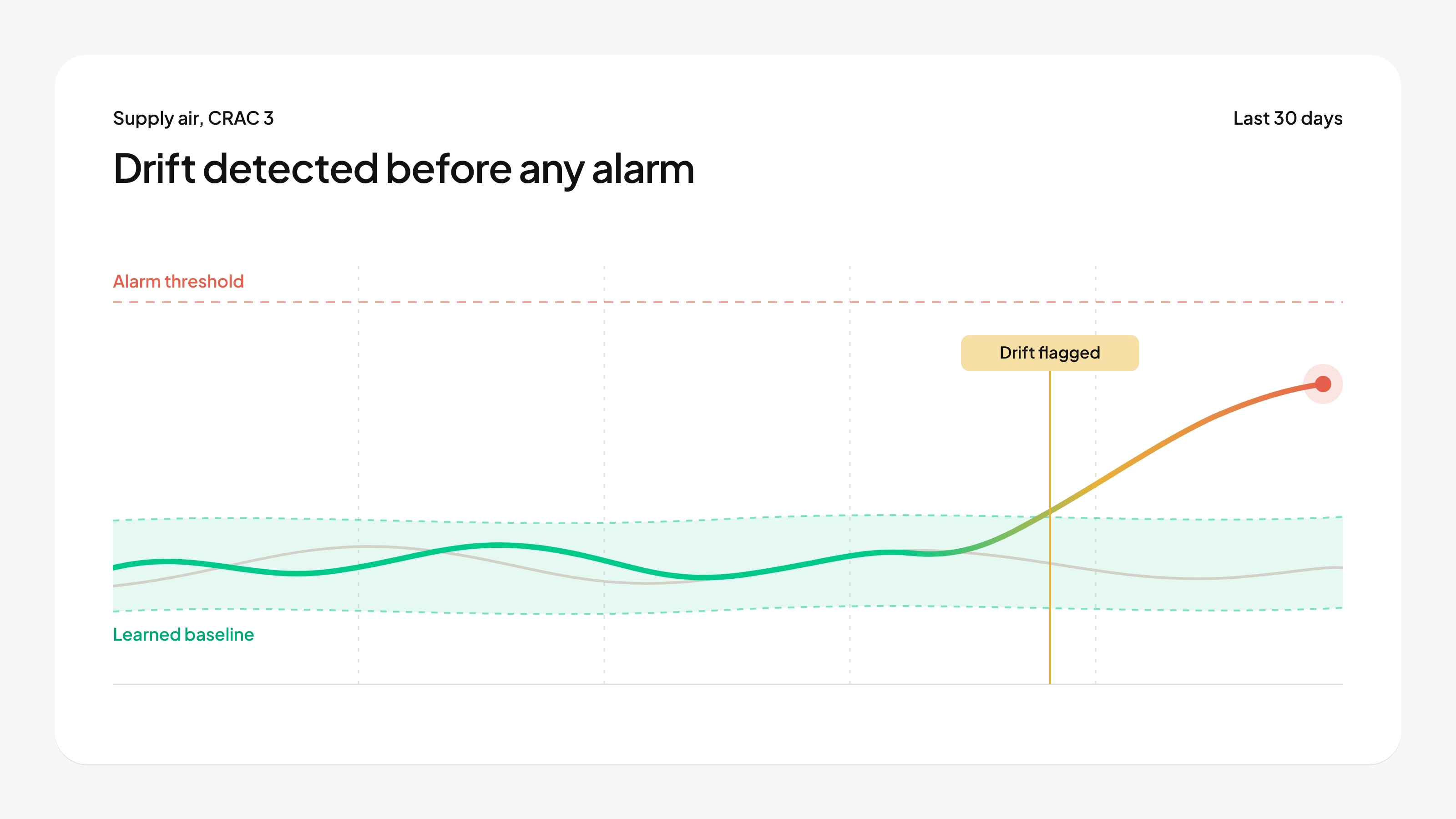
By the time a supply air temperature crosses its alarm point, the cooling unit behind it has usually been struggling for days. By the time a UPS throws a fault, the battery degradation behind it has been building for weeks. The threshold didn't miss anything. It just only knows one thing: whether a number is above or below a line.
That leaves operators with two bad choices. Set thresholds tight and drown in false alarms. Set them loose and find out about problems when they become incidents.
Failures don't arrive suddenly
Most equipment failures follow a pattern. A fan bearing starts to wear and vibration creeps up. A compressor works a little harder each day to hold the same temperature. Power draw drifts while output stays flat.
None of these changes trip an alarm on their own. Each reading looks normal. But taken together, and compared against how that specific piece of equipment usually behaves, they tell a clear story.
That story is what a dashboard can't read.
What predictive maintenance actually means
Predictive maintenance flips the question. Instead of asking "has this number crossed a line?", it asks "is this equipment behaving the way it normally does?"
To answer that, a system needs three things:
- Every signal in one place. Cooling, power, environmental and asset data, from every protocol your site speaks. A fault in one system often shows up first in another.
- A baseline for every asset. Not a generic limit, but a learned model of how each piece of equipment behaves under different loads, times of day and conditions.
- The ability to spot drift early. Small, sustained movements away from that baseline, across dozens of readings at once, long before any single one looks alarming.
This is where machine learning earns its place. No person can watch hundreds of assets across thousands of readings and notice that a handful are slowly moving the wrong way. A model can, continuously, without getting tired.
From alerts to decisions
Prediction on its own isn't enough. An operator doesn't need another stream of notifications. They need to know what to do, and when.
That means ranking issues by risk, so the most urgent fault rises to the top. It means turning a pattern into a plain recommendation: service this unit within two weeks, check this circuit before the next load increase. And it means keeping people in control. The system proposes, the operator approves.
The result is maintenance on your schedule rather than the outage's. Planned work instead of emergency callouts. Parts ordered before they're needed. Fewer surprises, and fewer 2am calls.
The same data, used better
The best part is that most sites already collect the data they need. The sensors are installed. The equipment is already reporting. It's just landing in separate systems, checked against static thresholds, and forgotten.
Predictive maintenance doesn't ask you to rip anything out. It asks you to look at what you already have in a smarter way.
Dashboards will always have a place. Seeing the state of your floor matters. But if the goal is to stop outages rather than report on them, you need a system that can see what's coming.
Rackview brings every system on your floor into one view, learns how each asset normally behaves, and flags failures before they become outages. Book a demo to see it on your data.